
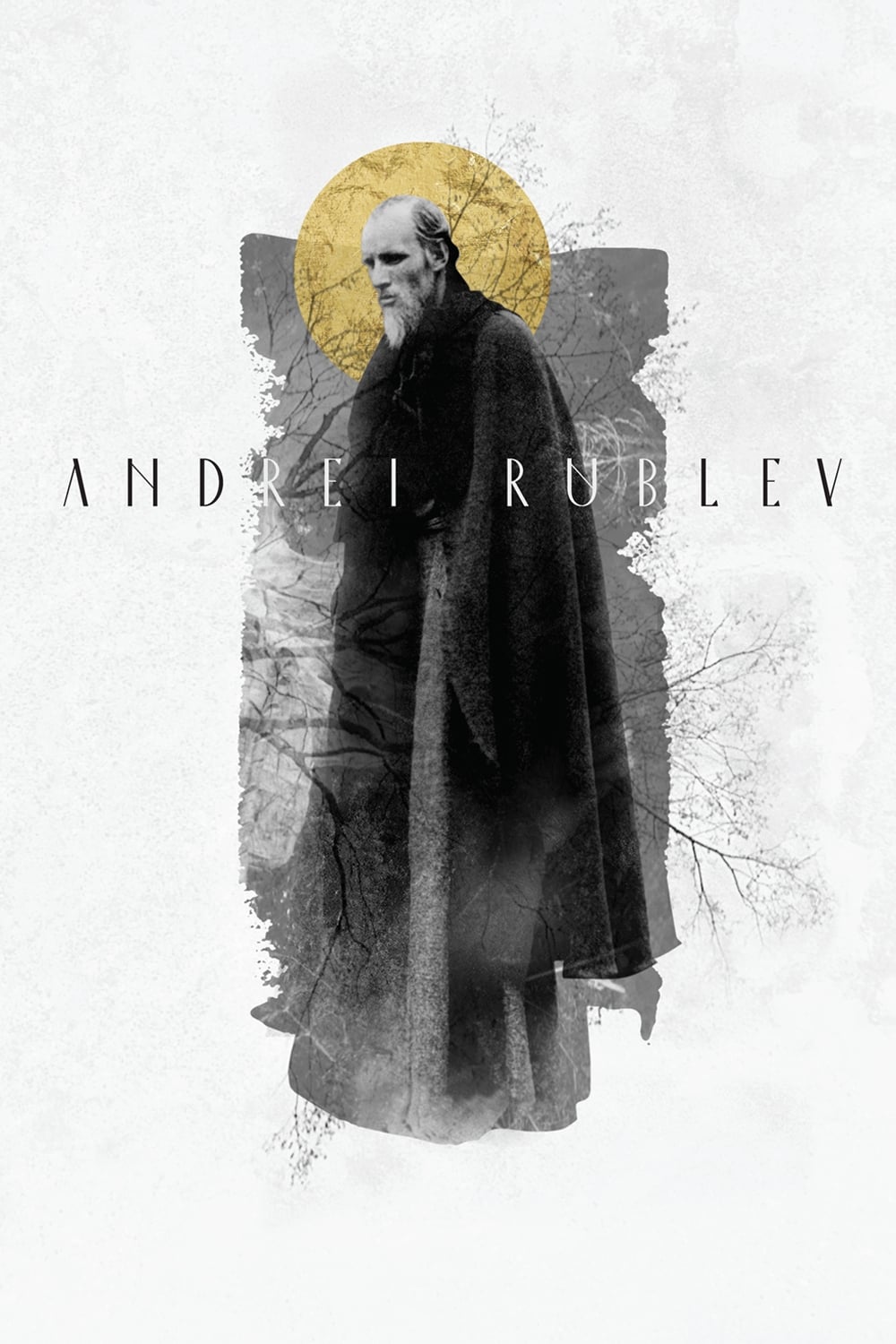
Why This Film Is Revisited Today
Whenever I bring up Andrei Rublev in conversation with friends who mostly stream contemporary movies, their eyebrows usually arch with a mix of wariness and curiosity. Honestly, I think there’s a unique richness in the way this film lingers on the edge of so many cultural dialogues today. Its legendary status as a demanding art-house touchstone ensures that it constantly circulates around “greatest movies” lists and think-piece articles, which inevitably captures the attention of people interested in stretching their cinematic boundaries. I’ve noticed that, more than ever, younger viewers stumble across Andrei Rublev not necessarily because they set out to seek a Russian epic, but because digital platforms give it new visibility—and because watching it has become something of a badge for film buffs looking to deepen their appreciation of cinema as an art form.
For me, the film’s reputation as both physically and emotionally challenging is its own kind of magnet. When almost every week a new decorous, easily-digestible drama releases, there’s something about the notoriety of Andrei Rublev that compels people to see what all the fuss is about. Controversy, too, keeps the conversation alive. Banned and cut in various forms for decades, the mythos around its suppression feeds the curiosity of contemporary viewers who crave stories that once rattled the status quo. And, let’s face it, there’s a certain intrigue in braving a “difficult” film; it sets the stage for discussion, debate, and discovery. I see that reflected in online forums, where people who’ve made it through the film swap perspectives, praise, and yes, sometimes, confessions of boredom.
Some part of me wonders if we keep circling back to Andrei Rublev because it feels defiantly “other” in today’s fast-moving, bite-sized content era. There’s no denying that it stands out against the convenience and accessibility of algorithmically recommended content. That distinction alone makes it a compelling reference point—almost a litmus test for viewers trying to parse out what feels truly weighty or elusive in cinema. I often hear the argument that all these deep-list classics are just homework for cinephiles. Still, there’s a palpable vibrancy to the way Andrei Rublev is discussed: not as something merely historic, but as a living work that still hits raw nerves about faith, power, and creativity.
What surprises me is the film’s emergence in academic and social conversations well outside of film studies. Whether it’s invoked in talks about censorship, artistic repression, or cultural identity, the movie clearly continues to punch above its weight class. Its visual style and ambiguity filter into TikTok essays, Letterboxd debates, and university curricula alike. From what I’ve seen, even those who don’t love the film appreciate it as a challenge to their habits and tastes, which, to me, is testament enough to its persistent relevance.
What Still Works for Modern Viewers
Having watched Andrei Rublev several times across the years, sometimes alone and sometimes in group screenings, I’m consistently struck by elements that still pulse with a certain timeless life. The film’s monumental black-and-white cinematography, for one, commands even the distracted eye. I would challenge anyone to find a modern digital film with the same patience and grandeur in composition—every frame feels considered, as if it’s reaching for something mythic rather than merely functional. That specific kind of visual ambition still impresses me, even in a decade when high-res cameras and digital manipulation are commonplace. The unyielding, tactile realism of muddy landscapes, rain-soaked bodies, and fire-lit interiors seems almost exhilarating after too much time spent in digital sandboxes or pristine CGI.
I don’t want to undersell the resonance of the performances, either. For all the film’s deliberate style and distance, I consistently find the actors—especially Anatoly Solonitsyn as Rublev—project a vulnerability and weariness that translates across eras. Human confusion, guilt, and transcendence play out in ways that don’t feel pinned to one historical moment. I can’t remember the last time I saw such convincing silences in a movie, and I find myself returning to that: the trust in audiences to live inside a character’s hesitation or terror. In a sense, I think this trust has a contemporary corollary in slow TV or meditative cinema, even if Andrei Tarkovsky’s approach is often denser and stranger.
What stands out most, for me, is the emotional heft that accumulates—not through clear catharsis or melodrama, but through a haunted ambiguity. We’re used to modern films that signpost their messages and manage our emotional arc; Andrei Rublev doesn’t really care if you catch every symbolic nuance. Oddly enough, I find that liberating. Instead of being spoon-fed, I’m asked to participate—to question, remember, and make meaning from silence and spectacle. That invitation, rarely extended by mainstream movies today, is itself a form of engagement that feels stubbornly relevant.
Another aspect that has held up surprisingly well is the film’s technical craftsmanship. Its large-scale action—whether cathedrals burning, pagan rituals, or terrifying acts of violence—retains a physicality that’s nearly impossible to fake. Watching these moments, I’m reminded how much tactile reality matters. I don’t mean to decry modern effects, but there’s an ineffable authenticity when the mud, rain, and crowds are real rather than composited. It helps draw me into the film’s world, and I think many viewers, tired of artificiality, will find that element still powerful.
While my relationship with the dialogue is mixed (it’s intentionally sparse and sometimes esoteric), I appreciate its refusal to modernize or pander. There’s a directness to moments of confrontation—almost anti-theatrical, raw, and unpoetic—that feels fresh today, especially in an era of overwritten exposition. For anyone fatigued by the predictable rhythms of dialogue-driven storytelling, Tarkovsky’s approach reads as radical—maybe even invigorating, in how little it cares for conventional narrative payoffs.
I also cannot overlook the unpredictable pacing, which sometimes works better now than it did in previous decades. We’ve become accustomed, in the era of limited series and prestige TV, to stories that take their time, draw out suspense, or refuse easy closure. The patience demanded by Andrei Rublev finds an oddly kindred spirit in binge-worthy but slow-building contemporary shows. I think that’s made modern viewers more open to this kind of durational intensity, even if they complain about it afterward.
What Feels Dated or Challenging Today
No matter how many times I’ve recommended Andrei Rublev, I always include a caveat: prepare for frustration, exhaustion, and occasionally even bewilderment. The film’s patience, which I sometimes praise, can easily tip into alienation for me—and, from what I’ve seen, even more so for those conditioned on today’s brisker pacing. At certain points, scenes linger well past what might feel natural, especially for an audience that checks their phones multiple times an hour. I don’t find this a flaw, exactly, but I recognize that it’s a serious hurdle for most viewers raised on the momentum of streaming-era storytelling.
Another element that feels distinctly of its time is the near-total absence of modern representation. The film is built around a single, stately Russian man and a parade of supporting characters who tend to merge into a gray mass of suffering. There’s not much relief, humor, or human warmth, and hardly any female presence with meaningful agency. For me, this lack is stark—less because I expect modern wokeness from a 1966 Soviet epic, and more because today’s viewers (myself included) often crave diversity of voice and experience onscreen. This is an issue that goes beyond historical accuracy; it’s a question of narrative generosity, and here, the film’s solipsism is evident.
I also struggle, sometimes, with the film’s opacity. Andrei Rublev seems to pride itself on ambiguity—eventually, the layers of symbolic action and cryptic gesture can build a frustrating wall for those not already attuned to mid-century European art cinema. I felt, at times, that the film asks a lot without making clear exactly what is at stake, especially during extended, almost wordless passages. For those who crave stories with clear motivations, arcs, or even dialogue, the film’s reticence verges on hermetic.
Violence is another sticking point for me and, I would guess, many contemporary viewers. By today’s standards, the film’s horror is neither stylized nor sanitized, and certain brutal sequences are unflinching in ways that are arguably more upsetting than modern digital gore. The violence feels messy, protracted, and lacking in catharsis. This realism is perhaps a strength—yet it can also be numbing, and I find some scenes teeter on the edge of being punishing rather than illuminating. For audiences sensitive to depictions of suffering, the film’s indifference to comfort is conspicuous.
The sound design and quality of audio (at least in most widely available transfers) present their own barriers. Dialogue sometimes gets swallowed up in atmospherics or odd mixing choices, and as someone who values clarity (especially when subtitles are involved), I find myself straining to catch inflections or intent. There’s a sense that the technology of the period limits immersion—background sounds can overwhelm voices, and certain moments are audibly muddy. For a viewer used to crisp modern soundtracks on high-quality earbuds or home speakers, this can be a nagging distraction.
Lastly, I have to admit the interface between the epic runtime and modern viewing habits poses a challenge. Nearly every streaming platform now offers flexible, pause-and-resume watching, and I suspect that most newcomers will break Andrei Rublev into multiple sittings. I don’t see this as sacrilege, but it does disrupt the operatic flow of the movie. Attention scarcity is real, and without the ritual of a darkened theater or communal screening, many of the moments of endurance may feel even less rewarding than they once did. For a segment of viewers, this film will simply be too demanding to justify in a world swamped by alluring, easily consumable alternatives.
How Modern Audiences Are Likely to Experience This Film
From my own recent attempts to introduce the film to others, the range of reactions is often extreme. Attentive viewers with a background in classic cinema or a taste for “difficult” narratives tend to treat Andrei Rublev as a peak climbing challenge—hard, rewarding, and littered with false summits. I notice that cinephiles, especially those who spend time seeking out world cinema, often experience a kind of delayed appreciation: bored or even frustrated during their first viewing, but later haunted by moments or images that prove persistently memorable. I’ve had people write to me weeks after a viewing, realizing that certain scenes had planted themselves in their imaginations, growing stranger and more vivid the more they thought about them.
More casual viewers, or those new to non-English-language films, are often put off by the sluggishness, gloom, and sheer weight of the film. If someone’s idea of “slow burn” is an episode of contemporary prestige television, the deliberate intensity of Andrei Rublev can feel like a slog. This risk is enhanced by the inconsistent visual quality or less-than-stellar subtitles that sometimes accompany digital versions. I wouldn’t recommend this film to people who aren’t already acclimated to subtitles, historical distance, or durational art—in fact, many who have taken my suggestion have admitted to abandoning the movie halfway through, not out of antipathy, but simple exhaustion.
That said, I think there’s a growing segment of younger viewers hungry for something truly outside the algorithm, and Andrei Rublev delivers that difference in spades. For college students, artists, and anyone wrestling with big existential questions, the film can serve as both artifact and provocation. Some respond most to its visuals, treating it as a moving gallery exhibition; others hook into its cryptic spiritual atmosphere, finding it oddly soothing compared to the relentless pace of commercial entertainment. In some cases, viewers treat the film as a series of memorable vignettes or set pieces, pausing to discuss particular moments or frame grabs rather than watching straight through in a single sitting.
Attention span is a real issue with any demanding, long-form movie, and I won’t pretend Andrei Rublev is immune to multitasking. Still, for those willing to give themselves over to its rhythms, there’s a chance to experience a sense of transport—rare in a media climate saturated with short-form, endlessly scrollable content. My experience suggests that treating the film as an event (gathering friends, silencing phones, dimming lights) improves not just understanding but actual enjoyment. For solitary viewers looking for a personal challenge, the film rewards focus and patience, though the lack of clear “payoff” by modern standards might leave some cold.
Compared with contemporary works that navigate similar themes or historical backdrops, Andrei Rublev strikes me as fiercer and harder to categorize. Modern films often smooth out narrative ambiguity or foreground representation—here, there’s little interest in translation. As much as I respect that, it does mean that newcomers may find themselves wishing for guide rails or clearer emotional signposts. For everyone accustomed to emotional handholding or digital spectacle, the film’s refusal to deliver on those expectations can be invigorating or alienating, depending mainly on personal taste and mood.
Importantly, I think that streaming access has made the film both more approachable and more fragmented. It’s easy now to watch an hour, pause, mull over, and return later. For some, this flexibility makes the film palatable; for others, it dilutes the experience. I’ve heard all sorts of viewing rituals—watching it on a Sunday afternoon in a quiet house, screening it across two nights, or laboring through it as part of an online film club. The variability in approach seems utterly contemporary and, if anything, aligns with how we now treat “classic” challenges: adaptable, negotiated, filtered through our own pace and patience.
Final Verdict: Is It Still Worth Watching?
Assessing whether Andrei Rublev remains worth watching today is, for me, less a matter of blind praise than honest fit. I genuinely believe the film has lost none of its power to unsettle and provoke. Its visual grandeur, intensity, and narrative daring are still rare commodities in modern filmmaking. But—and this is crucial—I don’t think it’s a universal recommendation. For those seeking escape, invigorating storytelling, or emotional clarity, the film will likely prove more daunting than rewarding. If, however, you want your viewing to be a challenge and are curious about cinema that asks more than it answers, then Andrei Rublev is still a mountain worth climbing.
In the end, my strongest argument for the film’s relevance is the lasting impression it leaves. I rarely recall every detail of even the best contemporary epics, but certain sequences from Andrei Rublev have never really faded for me. That’s not nostalgia—it’s the impact of a film that dares to demand a lot, and sometimes earns it. For adventurous or patient viewers, for those looking to interrogate their own expectations about what movies can be, the film is undoubtedly still worth the time. For others, sampling a few classic sequences might be enough.
Ultimately, I find that the film best rewards an open mind and a willingness to let go of modern comfort zones. It is neither background noise nor an easy binge. If you’re up for a rigorous cinematic experience and appreciate engagement that lingers far beyond the final frame, then yes, Andrei Rublev absolutely still deserves a place in your watchlist today.
For viewers curious about authenticity, exploring the film’s factual basis may be useful.