
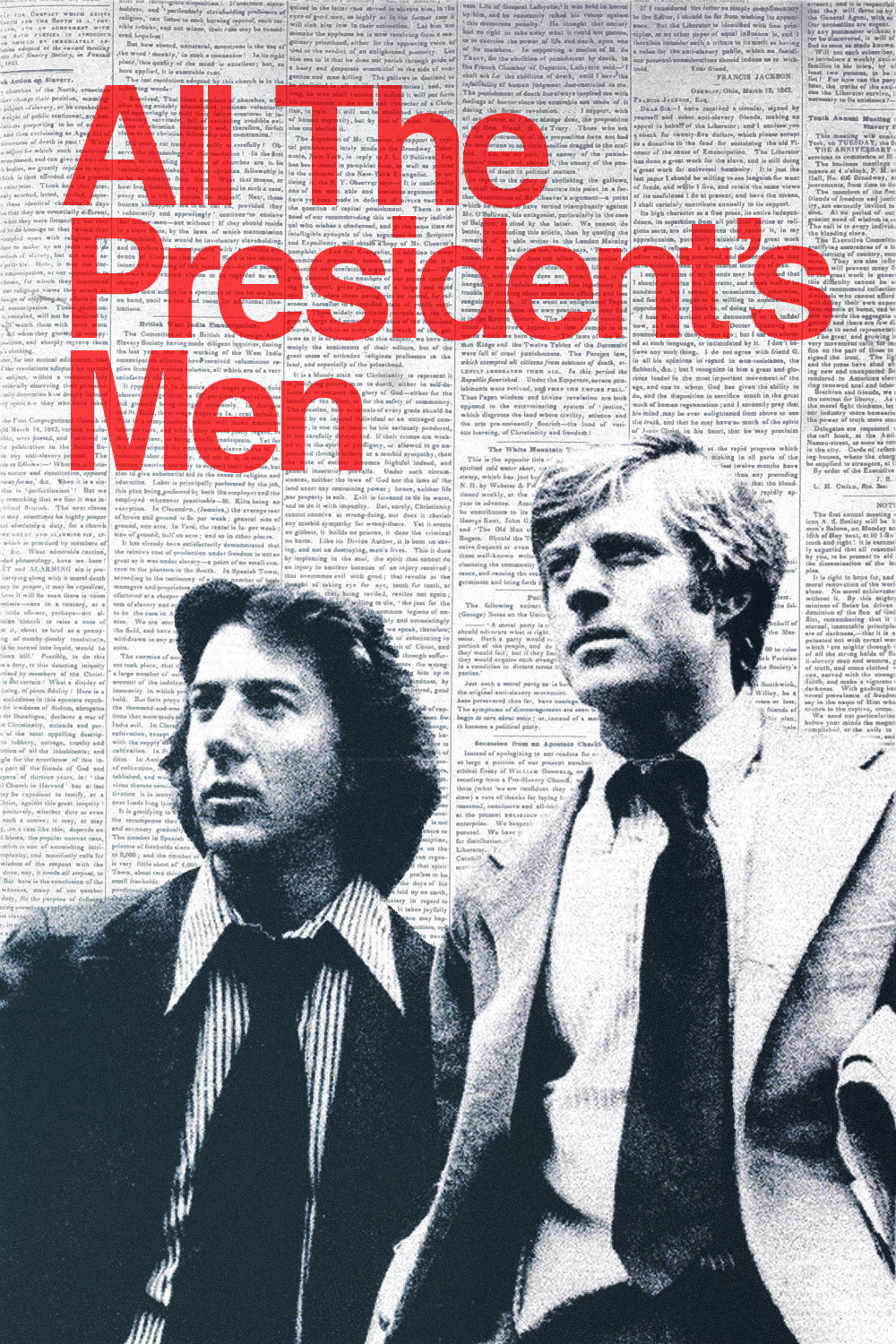
Why This Film Is Revisited Today
Sitting down with All the President’s Men in the current era feels less like diving into required viewing from a history syllabus and more like opening an archive marked “still open for debate.” I find people return to this film not because it’s simply a classic, but because the issues it wrestles with are back in the foreground of everyday conversation. The rise of misinformation, relentless scrutiny of media, and anxiety around government transparency mean that this movie surfaces regularly in online discussions and recommendation threads. Its presence on most major streaming platforms doesn’t hurt; its status as “just a click away” gives it a new type of longevity that older generations might not have anticipated. Watching it today, I suspect many are motivated by curiosity—either to see the origins of what serious investigative journalism looked like before clickbait or to understand why so many critics and pundits still refer back to it whenever political scandals break.
Honestly, for me, there’s a bit of myth-busting to the experience as well. The film’s reputation precedes it so much that younger viewers might start the movie expecting something grand and high-stakes, when it’s better described as muted but relentless. There’s also the draw of seeing big-name stars in their formative roles, along with an aura of “required viewing” that hangs over so many older prestige films. And while references and memes rooted in 1970s pop culture aren’t generally touchstones for Gen Z or Millennials, I see that certain scenes have entered popular GIF territory or inspired film and TV parodies, contributing to the movie’s persistent relevance. In an age where trending topics can push decades-old movies onto homepages, it’s hardly a surprise that new crowds are dusting off this once-provocative take on journalism.
I have noticed a subtle urgency in how public conversations about trust in the press tend to circle back to All the President’s Men. There’s an ongoing question: are there any modern media thrillers that do what this one did? From my perspective, its legacy as a reference point in debates about journalism remains solid, which makes it a kind of cultural conversation starter—or at least a yardstick against which newer, faster thrillers get measured.
What Still Works for Modern Viewers
Despite my general skepticism about whether “classics” can speak across generations, I have to admit that certain elements of All the President’s Men genuinely hold up for a 21st-century audience. The acting feels astonishingly contemporary—there’s very little theatricality or forced gravitas. Watching Dustin Hoffman and Robert Redford work, I got the sense they were channeling the anxious, relentless spirit of journalists who aren’t just after a big scoop, but are living the tension and uncertainty every single day. Their dynamic—marked by authentic chemistry and nervous energy—manages to feel alive, almost as though I’m eavesdropping on real newsroom conversations instead of watching scene work 50 years old.
The film’s dialogue also avoids the overwritten, melodramatic exchanges I half-expected. Instead, the script leans into the procedural, the step-by-step grind, and the overlapping chatter of actual office life. For anyone who’s ever worked in an open-office or spent late nights fact-checking, it’s easy to recognize the rhythm. The commitment to authenticity comes through in the sound design—a background hum of typewriters, ringing telephones, and the nervous ticks of pen against notepad. I appreciate how it builds anxiety not by exaggerating, but by narrowing its focus on minute details. Even in a time when I’m bombarded with slick, rapid-fire editing and multi-perspective storytelling, I find the craftsmanship here—editing, shot composition, even the muted color palette—operates with an understated style that’s oddly satisfying.
There’s also the matter of subtlety, now something of a lost art in the information age. I realized that All the President’s Men trusts its audience to fill in blanks. It doesn’t hammer home points with expositional dialogue or flashbacks. That implicit faith in the viewer pays off for me: there’s an absorbing sense of being drawn into processes, of not being spoon-fed but invited to keep up. The result is a kind of immersive tension that, while slow-burning, has the potential to really hook someone who finds satisfaction in payoff by accumulation rather than explosion.
What surprised me most was how some of the emotional beats land with fresh impact given today’s cynicism about institutions. Despite being set in a very analog age, the underlying anxiety—the feeling that a single misstep or overlooked piece of information could be disastrous—mirrors how I see ourselves reacting to major news stories now. Watching characters navigate uncertain outcomes, bureaucratic stonewalling, and personal risk, I found myself invested on a visceral level; the stakes feel human rather than just historical. For viewers who are willing to slow down, the film’s sense of unease and commitment to something larger than personal ambition still resonate surprisingly well.
What Feels Dated or Challenging Today
Of course, stepping back from my admiration, there’s no denying a wide gulf between this film and what I’m used to in today’s thrillers. The pacing can be punishing if you’ve grown up on the narrative bursts of streaming television or TikTok-length content. At times, scenes drag, drawn out by lingering silence, hesitant glances, and almost obsessive repetition of routine. If I weren’t anchoring myself in the movie’s intent, I might catch myself reaching for my phone or getting distracted, especially during stretches where the action happens more through implication than clear-cut confrontation.
I also notice a distinct lack of representation—both ethnically and in terms of visible gender roles. The movie’s perspective is firmly white, male, and professional. Women, for the most part, exist in marginal spaces: as secretaries, sources, or background office staff. By today’s standards, the newsroom feels monochrome, and for all the film’s commitment to realism, it offers little acknowledgment of wider social change or diversity. I find this absence makes the world it portrays feel strangely hollow, which may be distracting or alienating for viewers who expect a more inclusive story.
Another obvious challenge, at least for me, is rooted in the film’s technical environment. Typewriters clatter, files are sifted by hand, and phones have cords. For viewers who use smartphones as their primary news source, the investigative methods might seem archaic—or even quaint. There’s a certain pleasure in that, but it comes at the cost of immediate relatability. The analog pace, while charming in a retro way for me, can puzzle or fatigue viewers more accustomed to digital shorthand and rapid information retrieval.
Dialogues about journalism have evolved, and what was once seen as gritty realism might now look almost understated. The film doesn’t delve into the emotional toll of the story as much as I’d expect from modern biographical dramas. Psychological proximity—the sense of what it feels like to risk reputation or safety—remains mostly under the surface. By today’s standards, the film can come across as emotionally cool, even distant. The deliberate avoidance of sensationalism that once counted as a creative virtue now risks being interpreted as “flat” by those who expect more overt stakes and interpersonal conflict.
Finally, I can’t ignore that the film’s very spare, documentary-like style—once so radical—may seem less groundbreaking after decades of movies and miniseries influenced by it and, in some cases, surpassing its technique. If you’re coming to All the President’s Men after watching fast-moving, highly stylized investigative thrillers or prestige television with layered character development, the experience here may feel stripped down to the point of dryness.
How Modern Audiences Are Likely to Experience This Film
I suspect the initial hurdle for most contemporary viewers is sheer patience. The movie demands real focus; it’s unhurried, refusing to accommodate the fragmented attention spans cultivated by modern digital life. I know I had to remind myself to stop “multitasking” and instead commit to the slow-burn process the film champions. For viewers who crave immediate stakes and emotional fireworks, the pace might frustrate, coming off as deliberate to the point of sluggishness. On the flip side, if you’re the kind of viewer who enjoys procedural dramas—think Spotlight or series like The Wire—the experience can be quietly riveting.
Emotional access is another major factor. Because the film’s characters play things so close to the vest—there are no monologues about ideals, no explicit breakdowns or confrontations—it can feel emotionally remote. For someone seeking catharsis, big reveals, or self-discovery arcs, there might be disappointment. I found myself appreciating the underplayed performances, but I couldn’t ignore that some moments come off cold or impersonal by modern standards that favor “raw emotion” and personal drama.
Expectations around representation can color the viewing significantly. For BIPOC viewers, women, or anyone tired of stories where diverse voices are simply absent, the film’s homogeneity can feel not just noticeable but stifling. If you come to movies for a sense of identification or broader social scope, this one won’t scratch that itch. I feel a pang of frustration even as I admire the technical craft—there are opportunities for subtle character or perspective shifts that never arrive.
On a technical level, engagement really depends on your comfort with dated aesthetics. I find a certain fascination in the analog tools—rotary phones, giant stacks of paperwork—the tactile messiness of reporting before the internet. But I won’t pretend that everyone shares this retro curiosity. Younger viewers especially might find these elements distracting at best and, at worst, a barrier to immersion.
Still, for those interested in journalism’s mechanics or recent American political culture, there’s an undeniable thrill. The film’s build-up—quiet persistence escalating toward a sense of larger danger—feels satisfying in its subtlety, once you get accustomed to the rhythms. If I were to recommend it to friends, I’d specify: don’t expect seat-of-the-pants action or technicolor emotion. Instead, prepare for something incrementally gripping, rewarding your sustained attention with a world that feels lived-in even as it’s locked in time.
Final Verdict: Is It Still Worth Watching?
Time has both dulled and deepened All the President’s Men’s impact. In my view, it remains absolutely worth watching—if not for everyone, then for a sizable crowd hungry for nuance and atmosphere. The patient construction, focused performances, and intricate details offer a kind of viewing experience that’s rare today, especially if you approach it as more than a relic but less than a universal masterpiece.
If you’re a fan of slow-burn narratives, uncertain outcomes, and you’re curious about how films can create drama without spectacle, you’ll likely appreciate what’s on offer here. Those who study journalism, media ethics, or American politics will get particular value; the film’s scenes still echo into contemporary debates and new controversies, bolstering its ongoing relevance. But I wouldn’t push it on someone seeking fast-paced entertainment, strong emotional resonance, or stories with inclusive casts.
For me, a return to All the President’s Men offers a quietly compelling experience, rewarding in proportion to the investment you’re willing to make. It’s not a film that welcomes all comers with open arms, but for viewers ready to meet it halfway, there’s a raw, restrained power at work—one I find refreshing in the current landscape of excess and immediacy.
For viewers curious about authenticity, exploring the film’s factual basis may be useful.