
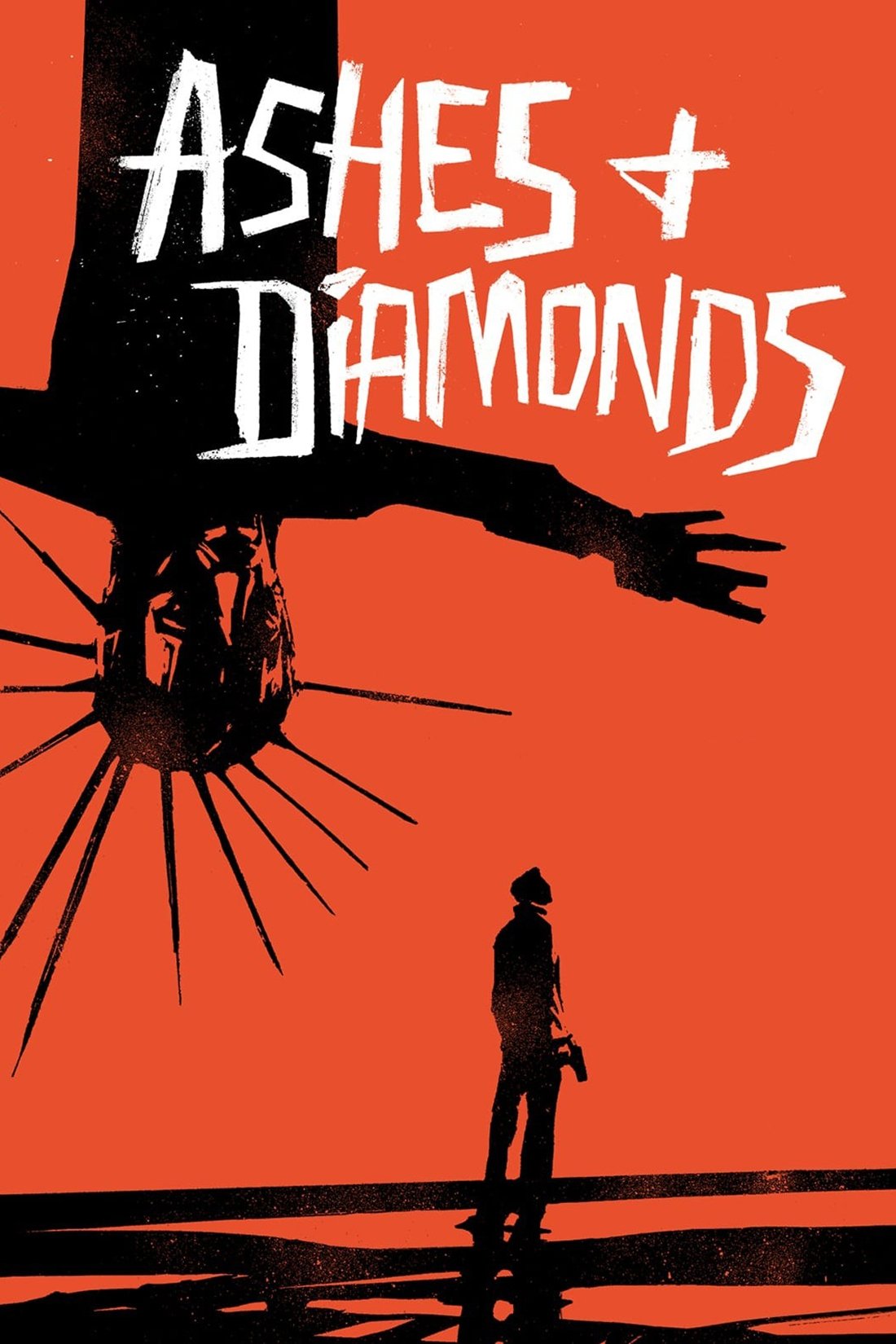
Why This Film Is Revisited Today
There’s something almost magnetic that pulls me back, each time I encounter discussions about “Ashes and Diamonds,” even all these decades after its release. For newer generations, the film isn’t simply a relic — it’s a source of curiosity, especially as it circulates via streaming platforms or finds its way into curated lists of world cinema essentials. I notice its resurgence whenever streaming services quietly add remastered classics, or when critics and social commentators reference the movie’s boldness and artistic risk-taking. Sometimes, it’s the controversy around its themes that invites people to watch, challenging viewers to re-examine its stance on war and political violence. Other times, its mere presence on scholarly lists — or its distinctive black-and-white imagery, now proliferating as screenshots on social media — makes people feel as though seeing it is a cultural obligation. For those already steeped in the history of European cinema, or even those just stumbling across it during a late-night browse, “Ashes and Diamonds” persists in conversations for its reputation as a touchstone of Polish film. I keep seeing it referenced in essays on what cinema once dared to be, and it’s almost as though its iconography — that famous bar scene, those matches, the stark lighting — lives on in visual language, appropriated by younger artists, filmmakers, and even fashion photographers. There’s definitely a sense that, for people today, watching it is not just about the narrative but about engaging with something that still feels controversial and evocative.
What Still Works for Modern Viewers
Despite being over sixty years old, I remain surprised at how much of “Ashes and Diamonds” retains its visceral impact. I’m struck by the performance at the film’s core — the lead actor’s haunted energy and striking physical presence somehow transcend language and era. This isn’t a case of appreciating a relic for nostalgia’s sake; there’s tension and a messiness in the emotions that still register as authentic. The ambiguity in the protagonist’s motives keeps me leaning forward, trying to parse out whether I’m watching a hero, a victim, or simply a lost person treading water in a world rebuilding itself from ruins. I notice how the camera lingers — handheld at times, deliberate at others — drawing me uncomfortably close to the characters’ private battles. For a film of its era, it’s visually experimental in ways I expect today from auteur-driven indie productions, not mid-20th-century dramas.
The soundtrack and production design still feel meticulously considered, never overbearing, rarely dated. There’s an evocative use of sound — sometimes silence — that loads every gesture, every sigh, with tension. I’m surprised how the setting never just serves as background; it feels lived-in, a world where destruction and hope battle for space in every frame. If there’s a sequence that lingers for me, it’s the ones where characters seem to question their own convictions mid-sentence, captured with such authenticity I almost forget the film’s age. It’s as if I’m silently eavesdropping on private mourning, trauma, or the urgency of love, without the filter of melodrama or performance. The relationships feel nuanced, quietly questioning everything — and that questioning remains deeply relevant for an audience raised on skepticism. The film’s emotional power, for me, doesn’t come from plotting; it’s in the tension between desire and duty, and the way the visuals communicate longing, regret, and brief flashes of connection or joy.
What’s most effective, in my view, is the film’s stark restraint. There’s none of the on-the-nose speechifying or sentimentality you might expect; instead, there are awkward silences, impulsive acts, and fleeting moments of vulnerability. I sometimes feel as though I’m watching something verging on modern minimalism. The director’s refusal to coddle the audience gives the whole film a sense of restlessness that’s rare even now. It’s uneasy, fragmented, a little bit jagged — qualities I associate more readily with contemporary arthouse cinema. Whether one comes at the film as a cinephile hunting for influence, or simply as someone keen on emotionally layered experiences, there’s a level of craftsmanship and control that easily stands up to today’s standards.
What Feels Dated or Challenging Today
That said, I can’t ignore how parts of “Ashes and Diamonds” now feel jarringly foreign or even uncomfortable for viewers raised on fast-cutting, over-explanation, or the technicolor richness of modern filmmaking. While I appreciate the deliberate pacing, I recognize how the story sometimes moves at a glacial pace by current expectations. There are long, nearly wordless stretches that demand patience; the film expects me to pay close attention or risk missing significant shifts in character or mood. For people more accustomed to narrative clarity and quicker resolution, these passages can feel frustratingly opaque, perhaps even pretentious at times.
Another noticeable aspect is the thematic framing. The treatment of political ideology and its entanglement with personal identity doesn’t always land the same way it may have decades ago. Today’s viewers, especially those less familiar with the nuances of Eastern European postwar realities, may find some moments contextually alienating. The historical specificity of the setting can, ironically, make the film both compelling and exclusionary. I find myself occasionally wishing for more background or subtle guidance — not to oversimplify, but simply to help decode some character dynamics and allegiances without reaching for a study guide or Wikipedia.
Representation also stands out as a challenge. The gender dynamics reflect their era, not ours. I’m hyperaware now of how women in the film often serve as emotional foils or objects of desire, rather than fully realized agents in the unfolding drama. Though these dynamics aren’t uniquely dated — and certainly not unique to this film — I do find my patience wearing thin when women’s roles are reduced to passive listening or mere romantic symbolism.
Technically, some elements do feel locked in their time: the black-and-white grain, the theatricality of certain performances, or moments where the lighting and set-ups pull me out of the story. For those used to more naturalistic acting or digital sheen, this aesthetic can be a hurdle. Even the dialogue, while affecting, carries the weight of its era’s verbal rhythms and cadences. Sometimes it’s poetic, sometimes stilted. I can imagine viewers who want tighter dialogue or modern banter feeling disengaged at points.
Finally, there’s the issue of cultural distance. For viewers who don’t come in with a baseline understanding of Polish history or mid-20th-century conflicts, some emotional stakes can be lost in translation. The film asks a lot — in patience, in empathy, in willingness to accept ambiguity and moral messiness — and doesn’t provide the ease-in or sense of narrative safety that is more common in present-day releases. The ambiguity is intellectually rewarding, but at times, it can feel emotionally withholding.
How Modern Audiences Are Likely to Experience This Film
My sense is that reactions to “Ashes and Diamonds” are going to diverge widely among contemporary viewers, depending almost entirely on background, attention span, and viewing context. For those who regularly seek out “prestige” international cinema, there’s likely a deep appreciation for the film’s atmosphere and risky ambiguity. Someone acquainted with the critical canon, or who has made a habit of diving into midcentury European film, will find the disquieting visuals and antihero drama quite familiar, maybe even invigorating.
But I also see a very real possibility of restlessness, even fatigue, in audiences more accustomed to relentless pacing, vivid color palettes, and straightforward emotional signposting. Today’s cinema rarely loiters; it drives forward relentlessly, anticipating every viewer’s question and plotting a clear course. “Ashes and Diamonds,” by contrast, offers open space — lingering silences, pauses thick with implication, debates that end unresolved. I find that if I’m not already in the mood to watch something challenging, the film’s deliberate pacing can feel more punishing than rewarding. It’s best encountered when I have the bandwidth for focused, active watching — not as late-night background, and not as breezy entertainment.
Younger viewers used to social media’s hyper-compressed storytelling may need to recalibrate expectations. This isn’t a film that can be half-watched while texting, or digested through highlight reels. I think even cinephiles may find the bar-scene-heavy narrative spatially disorienting if they anticipate Hollywood’s clarity of geography and movement. On the flip side, viewers with a taste for mood pieces, unvarnished realism, or the slow-burn tension of A24-era indies may actually feel more at home than anticipated. I’ve found audiences who appreciate films like “Cold War” or “Ida” from recent years are more likely to find this earlier Polish work stimulating and worthwhile.
Another challenge is the degree of emotional detachment. “Ashes and Diamonds” is not, by contemporary standards, an open wound or a tearjerker; it’s elliptical, layered, often refusing to explain itself. I’ve met people who feel unmoved, left out in the cold by the very ambiguity I find fascinating. For those looking for catharsis, the film’s refusal to moralize or fully resolve character arcs may be a deal-breaker. For others, especially those who tire of didactic storytelling, that same refusal could make the experience far more potent.
Emotionally mature viewers — anyone craving something outside the sanitized mainstream — may find the film a bracing corrective to modern polish. But I suspect some will need real patience for moments that seem meandering or even inert. The key is going in with an open mind and a willingness to sit with unresolved questions. In the classroom or festival setting, where active discussion follows, “Ashes and Diamonds” can generate hours of debate. In solitude, it can be more of a Rorschach test — prompting strong reactions without ever providing clear instructions for how to feel.
Final Verdict: Is It Still Worth Watching?
After watching “Ashes and Diamonds” through a modern lens, I can say that its enduring value depends as much on the viewer as on the film itself. For me, there’s an undeniable force in the film’s emotional ambiguity, its quietly defiant craftsmanship, and the way it withholds easy answers. If you’re someone with patience for challenging cinema — or who actively craves the kind of formal experimentation that mainstream film now mostly avoids — this is a viewing experience I believe is still worth your time. Its relevance today, for me, is less about reliving a supposed golden age and more about re-engaging with questions that contemporary storytelling rarely asks without offering neat solutions.
The film isn’t a comfortable fit for every taste. If your preference leans toward fast-moving, high-saturation, or easily digestible stories, “Ashes and Diamonds” may leave you feeling disconnected. For those unsure about classic films generally, I would recommend starting with an open mind — but also seeking out some brief context before watching, to help navigate its more challenging passages. Where it excels is providing a tactile sense of aftermath, disorientation, and emotional honesty. Where it falters, for me, is in expecting viewers to bridge historical and cultural gaps without much help.
Overall, I find “Ashes and Diamonds” is still worth watching for those seeking to challenge themselves — emotionally, intellectually, and aesthetically. It isn’t a universal recommendation, but for anyone with curiosity about innovative filmmaking or who wants to interrogate what cinema can do beyond comfort and spectacle, this film still has power to move and unsettle. Even now, it feels less like a relic and more like an unresolved question.
For viewers curious about authenticity, exploring the film’s factual basis may be useful.
🎬 Check out today's best-selling movies on Amazon!
View Deals on Amazon