
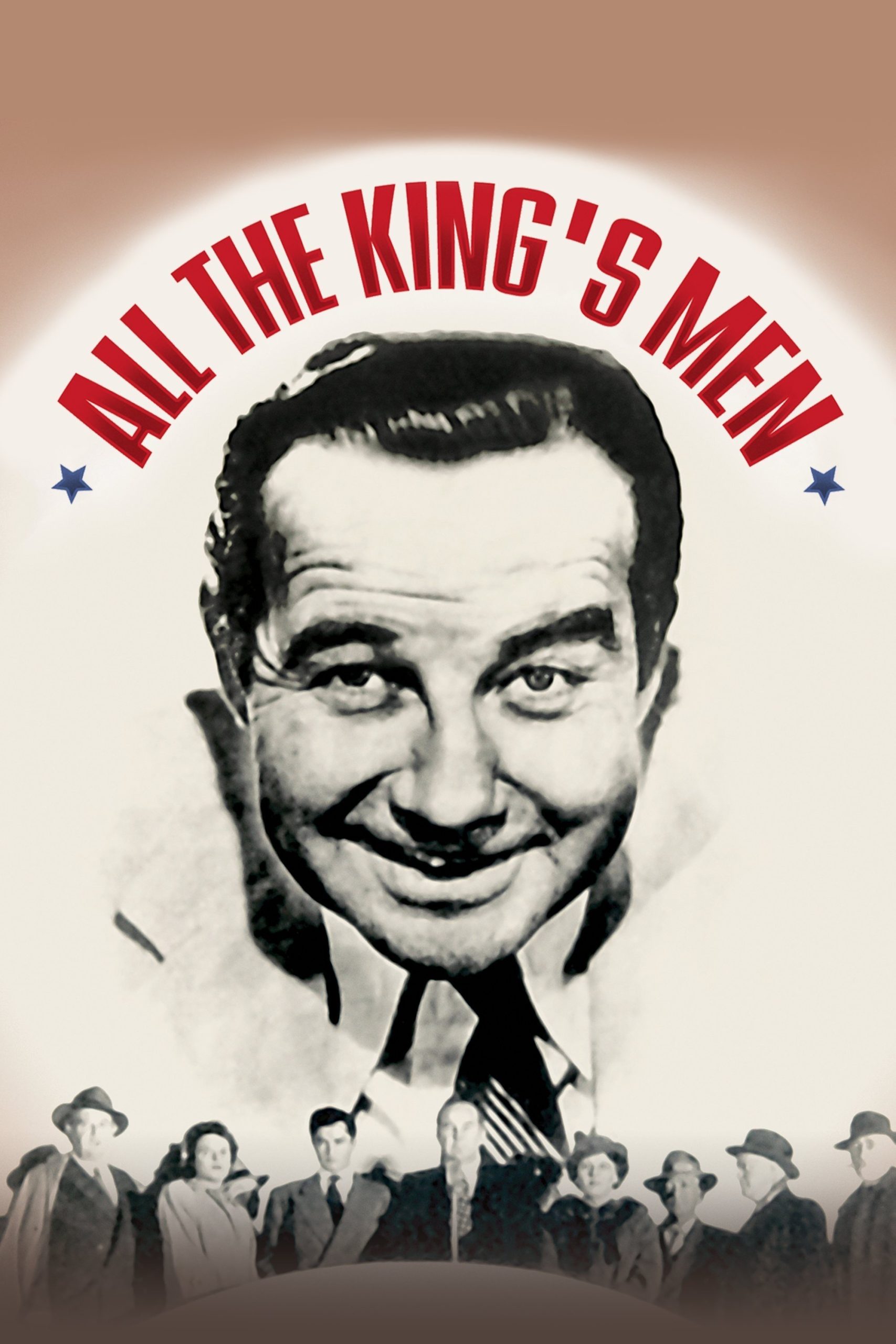
Does This Film Still Hold Up Today?
If I’m honest, sitting down to “All the King’s Men” today felt like walking into a grand old theater expecting to be swept up in drama, only to find I needed to meet the movie more than halfway. For viewers who crave sharp, urgent storytelling and contemporary energy, I can’t enthusiastically recommend this film for an unfiltered, impulsive night of streaming. “All the King’s Men,” despite its acclaimed reputation, now lands best as a conditional recommendation—mainly for those who either crave old-Hollywood melodrama or have a genuine interest in witnessing the roots of today’s “political downfall” movies in their purest, most vintage form. If your tastes lean toward lively pacing and naturalistic acting, you might find yourself checking the clock, but I found there are still moments that cut through the black-and-white haze—even now. Still, the journey is undeniably uneven when judged against how effortlessly movies pull us in today.
Pacing, Acting, and Storytelling by Today’s Standards
Watching “All the King’s Men” after being used to modern films feels more like dropped into a slow-moving train than a speeding bullet. I could sense immediately that the rhythm doesn’t match what I’ve come to expect—there are lengthy monologues, repeated camera set-ups, and a measured approach to almost every revelation. Scenes linger, sometimes to the point where I found myself braking for emotional impact that never fully arrived. It’s not just that the movie is methodical; it expects me to hang with it, almost daring me to turn away.
The performances are a peculiar mix. Broderick Crawford’s portrayal of Willie Stark is the most accessible touchpoint for a modern viewer—he’s loud, brash, and at times, so animated that I could almost believe he stumbled out of a more contemporary film, save for the instantly outdated cadence. However, the supporting cast’s delivery reminds me how much acting styles have shifted; the grand gestures, the melodramatic inflections, and the way characters announce their pain or ambition like they’re on stage rather than immersed in the story, all remind me why some people feel a chasm between “then” and “now.” Dialogue-heavy scenes ask for patience. The movie’s structure isn’t as tightly wound, so I experienced more telling than showing, which sometimes kept me from getting lost in the ride.
I couldn’t help but notice how slow-burn revelations and character pivots would likely test today’s shorter attention spans. I’m used to films laying cards on the table much faster, or at least creating a rhythm where quiet moments and climaxes are in sharper balance. The momentum in “All the King’s Men” is undeniably uneven to my eyes: some chunks pull me in, as Willie Stark transforms and spirals, but others drift in limbo, forcing me to actively wrestle with engagement. I found myself trying to appreciate the deliberate pacing as an intentional mood, but sometimes it merely felt like inertia. Plus, for those who now expect a more intimate form of visual storytelling, the film’s approach to narrative distance—where emotion is performed, not lived—will feel almost foreign.
What Feels Timeless — and What Feels Dated
- Timeless elements: I have to admit there’s an electricity to watching political ambition fracture and consume a once-idealistic figure. As Willie Stark’s journey darkened, I saw echoes of public figures still talked about on today’s podcasts and op-eds—his combination of populism and corruption is something I recognize instantly. The film’s best scenes, especially when the camera lingers on Stark’s blistering public orations, crackle with a kind of raw, sweaty charisma that feels honest even in black-and-white. The core question—how do power and conviction poison each other?—can still land hard if I’m in the right mood. When the movie leans into its messy, human side, there are flashes that transcend the antique surface. There’s a satisfaction in watching a performance as fierce as Crawford’s, which resists cliché even by today’s standards.
- Dated elements: For starters, the film’s sound design and music hit my ears like they’re blaring from an old radio—pronounced, insistent, and overbearing at times. Dialogue sometimes feels overwrought: people explain their feelings, motives, and backstories with a volume and directness that isn’t only out of step with how we speak but also with how films now trust us to read between the lines. The female roles especially stood out to me as limited, mostly existing to orbit the men, a trope that’s not just old-fashioned but exhausting by current standards. Cinematically, there are very few visual surprises, with little of the visual dynamism that keeps my eyes alert during quieter passages in newer films. The plot’s moralizing streak is another artifact, with characters essentially apologizing or confessing straight to the camera for effect. Sometimes, instead of feeling the story, I felt like I was being sternly lectured from across the decades.
Strengths and Weaknesses for Modern Audiences
I found myself in a tug-of-war between respect for the film’s strengths and frustration at its blind spots. If you have patience for a story that simmers and broils rather than bursts into flame, “All the King’s Men” does reward attention. The biggest draw for me is watching the ferocity in Broderick Crawford’s performance—a kind of juggernaut energy that rolls past the film’s stiffest moments. When the movie strikes genuine tension, I could feel the suspense ripple forward, and there were surprisingly tense exchanges despite the film’s age and formality.
But every high comes with reminders of the medium’s evolution. The pace repeatedly tested my focus; stretches of the movie are talk-heavy, requiring more listening stamina than I’m used to. Emotional engagement is hampered, at least occasionally, by the way characters project feelings outward, rather than letting me in for a firsthand experience. There’s little in the way of psychological nuance compared to what I get from more recent drama—personalities are often asserted rather than revealed gradually, which diluted the impact for me. The emotional climax didn’t hit me in the gut the way the story seems to want—more of an intellectual wrap-up than a gut punch.
I also have to mention accessibility. The film’s dialogue-heavy approach and reliance on that era’s speech patterns can make it tricky if you’re not already used to the cadence; I was glad for subtitles at times just to parse through accents and crowded compositions. For viewers who benefit from tight plotting or fast-moving narrative reveals, this movie’s patience might not feel like a virtue. While the basic trajectory of power leading to downfall feels evergreen, the hurdles of outdated pacing, limited diversity in character voices, and a consistently on-the-nose script are hard to ignore. Yet, every so often, the film surprises by grabbing me with a moment of spontaneity or contemporary resonance—the anger at corrupt systems, the seduction of populist movements—those shocks of relevance are fleeting but real.
Who Should Watch This Film Today?
If you’re the kind of viewer who relishes old-school melodrama—where the stakes are high, the speeches are thunderous, and the flaws are worn on every character’s sleeve—then you’ll likely appreciate watching “All the King’s Men” as a preserved artifact with moments that still bite. Anyone with a deep curiosity about how stories of political ambition and fallout were framed in another era might find genuine fascination, especially if you want to compare vintage storytelling to the darker and subtler takes offered in today’s film and television landscape. Film buffs, period piece enthusiasts, and those eager to see where certain tropes got their cinematic start might find it worthwhile, especially if they view it as a kind of time capsule, not just a drama.
However, viewers who need emotional subtlety, brisk pacing, or visual excitement to feel invested will likely struggle. I would steer away anyone with low tolerance for grandstanding monologues or broad, theatrical acting. The lack of character development for women, the rigid structure, and the emphasis on telling rather than showing are all likely to irritate viewers used to richer, more balanced storytelling. If film noir, classic literature adaptations, or slow-burning drama appeal to you, and you don’t mind meeting the film where it’s at, “All the King’s Men” might still land.
I walked away feeling that while I respected parts of the film, the barriers to entry are higher than I remembered or anticipated. I wouldn’t call it “must-see” for today’s audiences unless you’re on a quest to fill out your knowledge of cinema milestones or have a particular affinity for glowering, larger-than-life performances. For everyone else, the struggle to connect may simply outweigh the rewards, unless you watch with a group eager to discuss where the movie so clearly clashes with, and foreshadows, our own era’s political storytelling.
If you’re still deciding, you may also want to know how this film was originally received.
🎬 Check out today's best-selling movies on Amazon!
View Deals on Amazon